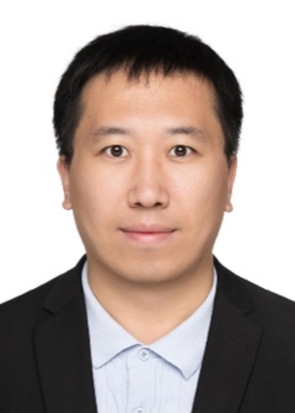
许光辉
个人简介
2008年9月-2012年6月,河北农业大学,本科
2012年9月-2015年6月,中国农业大学,硕士
2015年9月-2019年6月,中国农业大学,博士
2020年1月-2026年8月,美国Salk研究所,博士后
2026年9月至今,中国科学院分子植物科学卓越创新中心,研究员
研究工作
主要成果
植物基因组除蛋白编码基因外,还含有大量转座子等非编码序列。这些非编码序列在植物演化与性状形成中发挥重要作用,但其活性必须受到严格调控,否则将严重威胁基因组稳定性。许多物种在进化过程中形成了高度相似的转座子调控策略:以染色质化学修饰作为标记,指示DNA的活性状态。例如,组蛋白乙酰化通常使组蛋白与DNA的结合更为松散,从而促进DNA转录;而DNA甲基化则作为抑制信号,降低DNA活性。染色质化学修饰具有极强的位点特异性。负责建立这些修饰的酶(writers)必须通过特定机制,从数以亿计的基因组位点中选择正确靶标以建立相应标记。本课题组以玉米为研究对象,解析染色质修饰的靶向调控机制及其对基因表达的调控作用,并研究其在玉米根系生长和环境信号响应中的功能。具体研究方向包括:
(1)DNA甲基化和组蛋白修饰如何响应玉米根系发育和环境信号;
(2)染色质修饰的识别机制及其基因表达调控机制;
(3)玉米根系结构建成的分子遗传基础。
1. Xu, G., Chen, Y., Martins, L.M., Li, E., Wang, F., Magana, T., Ruan, J., and Law, J.A. (2025). Transcription factors instruct DNA methylation patterns in plant reproductive tissues. Nature Cell Biology 27, 2116–2127.
Highlighted in Nature Plants News & Views: https://www.nature.com/articles/s41477-025-02169-5
2. Xu, G., and Law, J.A. (2024). Loops, crosstalk, and compartmentalization: it takes many layers to regulate DNA methylation. Current Opinion in Genetics & Development 84, 102147.
3. Xu, G., Cao, J., Wang, X., Chen, Q., Jin, W., Li, Z., and Tian, F. (2019). Evolutionary metabolomics identifies substantial metabolic divergence between maize and its wild ancestor, teosinte. The Plant Cell 31, 1990–2009.
4. Fu, Y., Xu, G., Chen, H., Wang, X., Chen, Q., Huang, C., Li, D., Xu, D., Tian, J., Wu, W., Lu, S., Li, C., and Tian, F. (2019). QTL mapping for leaf morphology traits in a large maize-teosinte population. Molecular Breeding 39, 103.
5. Xu, G., Wang, X., Huang, C., Xu, D., Li, D., Tian, J., Chen, Q., Wang, C., Liang, Y., Wu, Y., Yang, X., and Tian, F. (2017). Complex genetic architecture underlies maize tassel domestication. New Phytologist 214, 852–864.
6. Raeisi Dehkordi, S., Wong, I.T.L., Ni, J., Luebeck, J., Zhu, K., Prasad, G., Krockenberger, L., Xu, G., Chowdhury, B., Rajkumar, U., and Caplin, A. (2025). Breakage fusion bridge cycles drive high oncogene number with moderate intratumoural heterogeneity. Nature Communications 16, 1497.
7. Felgines, L., Rymen, B., Martins, L.M., Xu, G., Matteoli, C., Himber, C., Zhou, M., Eis, J., Coruh, C., Böhrer, M., and Kuhn, L. (2024). CLSY docking to Pol IV requires a conserved domain critical for small RNA biogenesis and transposon silencing. Nature Communications 15, 10298.
8. Zhou, M., Coruh, C., Xu, G., Martins, L.M., Bourbousse, C., Lambolez, A., and Law, J.A. (2022). The CLASSY family controls tissue-specific DNA methylation patterns in Arabidopsis. Nature Communications 13, 244.
9. Tian, J., Wang, C., Xia, J., Wu, L., Xu, G., Wu, W., Li, D., Qin, W., Han, X., Chen, Q., Jin, W., and Tian, F. (2019). Teosinte ligule allele narrows plant architecture and enhances high-density maize yields. Science 365, 658–664.
10. Huang, C., Sun, H., Xu, D., Chen, Q., Liang, Y., Wang, X., Xu, G., Tian, J., Wang, C., Li, D., Wu, L., Yang, X., Jin, W., Doebley, J.F., and Tian, F. (2018). ZmCCT9 enhances maize adaptation to higher latitudes. Proceedings of the National Academy of Sciences USA 115, E334–E341.
11. Guo, L., Wang, X., Zhao, M., Huang, C., Li, C., Li, D., Yang, C.J., York, A., Xue, W., Xu, G., Liang, Y., Chen, Q., Doebley, J., and Tian, F. (2018). Stepwise cis-regulatory changes in ZCN8 contribute to maize flowering-time adaptation. Current Biology 28, 3005–3015.
12. Liang, Y., Liu, Q., Wang, X., Huang, C., Xu, G., Hey, S., Lin, H.-Y., Li, C., Xu, D., Wu, L., Wang, C., Wu, W., Xia, J., Han, X., Lu, S., Lai, J., Song, W., Schnable, P., and Tian, F. (2018). ZmMADS69 functions as a flowering activator through the ZmRap2.7–ZCN8 regulatory module and contributes to maize flowering time adaptation. New Phytologist 221, 2335–2347.
13. Wang, X., Chen, Q., Wu, Y., Lemmon, Z.H., Xu, G., Huang, C., Liang, Y., Xu, D., Li, D., Doebley, J.F., and Tian, F. (2018). Genome-wide analysis of transcriptional variability in a large maize-teosinte population. Molecular Plant 11, 443–459.
14. Xu, D., Wang, X., Huang, C., Xu, G., Liang, Y., Chen, Q., Wang, C., Li, D., Tian, J., Wu, L., Wu, Y., Guo, L., Wang, X., Wu, W., Zhang, W., Yang, X., and Tian, F. (2017). Glossy15 plays an important role in the divergence of the vegetative transition between maize and its progenitor, teosinte. Molecular Plant 10, 1579–1583.
15. Huang, C., Chen, Q., Xu, G., Xu, D., Tian, J., and Tian, F. (2016). Identification and fine mapping of quantitative trait loci for the number of vascular bundles in maize stem. Journal of Integrative Plant Biology 58, 81–90.
16. Li, D., Wang, X., Zhang, X., Chen, Q., Xu, G., Xu, D., Wang, C., Liang, Y., Wu, L., Huang, C., Tian, J., Wu, Y., and Tian, F. (2016). The genetic architecture of leaf number and its genetic relationship to flowering time in maize. New Phytologist 210, 256–268.

Copyright © 2002-
中国科学院分子植物科学卓越创新中心 版权所有
地址:中国上海枫林路300号(200032)
电话:86-21-54924000
传真:86-21-54924015
Email: webmaster@cemps.ac.cn